抽象
Electrostatic discharge (ESD) represents a critical safety hazard for electric and electronic detonators used in civil explosive applications. Improper electrostatic exposure may trigger accidental initiation, functional damage or timing deviation of electro‑explosive devices (EEDs). With the release of revised EN 13763‑13:2025 standard, significant updates have been introduced for scope, generator configuration, test items and sample requirements compared with the legacy EN 13763‑13:2004 version. This paper reviews major technical differences between the two standard editions and introduces the LISUN ESD‑ES30KV Explosive ESD Test System as a compliant hardware platform to implement updated EED ESD validation. Key parameters, generator‑level technical distinctions and practical application scenarios are discussed to support laboratory testing, product certification and research‑and‑development verification for detonator manufacturers.
Civil blasting increasingly adopts electronic detonators with programmable delay functions, bringing new electrostatic‑related failure modes beyond traditional electric detonators. The old EN 13763‑13:2004 standard only covered basic human‑body‑model pin‑to‑pin discharge for electric and partial electronic detonators, lacking machine‑model simulation and tests during the delay execution window. The updated EN 13763‑13:2025 re‑defined application scope, test sequences, sample quantities and ESD generator requirements, creating higher hardware implementation thresholds for test equipment.
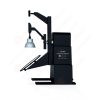
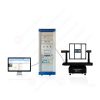
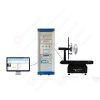
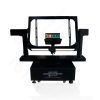
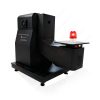
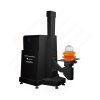
有資格者 爆発性ESD試験システム must support flexible RC module switching, adjustable discharge intervals, multi‑model ESD simulation and strict safety interlock for high‑voltage explosive testing. The LISUN ESD‑ES30KV system is designed to satisfy both European civil‑explosive standards and multiple military specifications including MIL‑STD‑331 series and Chinese GJB fire‑work‑related standards, covering ESD sensitivity evaluation for powders, fuzes, electric detonators and electronic detonators.
爆発性ESD試験システム
The most prominent change of the 2025 revision lies in generator architecture and test‑item expansion. The 2004 standard adopted two independent generator sets, Generator A for conventional electric detonators and Generator B for electronic detonators. Generator B features shorter discharge intervals, fixed RC values and higher electromagnetic‑interference risk, increasing hardware difficulty. The new standard adds Machine Model (MM) besides the original Human‑Body Model (HBM). Furthermore, it specifies an additional test condition: applying ESD pulses after firing command and before delay expiry, which simulates real‑world static risks while the detonator is in delay‑counting state. Sample‑size requirements are updated: electronic detonators require 200 pieces for non‑delay units and 350 pieces for delay‑type products, with extra samples demanded for multi‑conductor detonators.
| 比較項目 | ESD Generator A (Conventional Electric Detonators) | ESD Generator B (Electronic Detonators) |
|---|---|---|
| テスト対象デバイス | Conventional electric detonators | 電子起爆装置 |
| Series resistance range | 0.5 Ω ~ 5 kΩ (typical 0.5 Ω) | ≤0.5 Ω or (330±16.5) Ω |
| Capacitance setting | 500 pF ~ 3500 pF (typical 2500 pF) | Fixed: (330±16.5) pF, (2000±100) pF |
| 最大試験電圧 | 最大25kV | 800 V ~ 28 kV |
| 放電間隔 | 10秒 | 1秒 |
| テストシーケンス | 5 consecutive discharges, 10 s interval | 5 consecutive discharges, 1 s interval |
| Supported ESD model | 人体モデル(HBM) | HBM + Machine Model (MM); supports discharge during delay window |
| 技術特性 | Long interval, smooth energy release, low spark‑interference risk | Short interval, high‑voltage high‑resistance output, strong EMI, high hardware‑implementation difficulty |
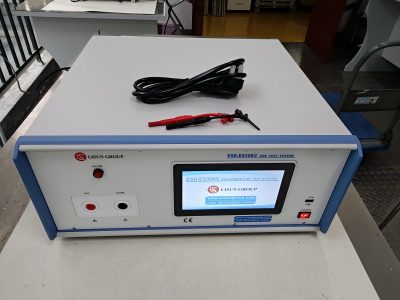
The ESD‑ES30KV is a representative 爆発性ESD試験システム targeting EED compliance testing. Its main specifications are: output voltage ±300 V ~ ±30 kV with 10 V adjustment step; voltage accuracy better than ±5 %; interchangeable plug‑in resistance and capacitance modules with dual‑slot parallel‑combination capability; discharge pulse interval adjustable starting from ≥0.1 s, which fully covers the 1 s /10 s interval requirements in EN 13763‑13 standards.
Built‑in safety features contain high‑voltage real‑time monitoring and mechanical safety interlock to prevent operator hazards during explosive‑device testing. A 5‑inch IPS touch screen provides intuitive parameter configuration and test‑sequence execution. Users can select optional RC modules (0 Ω, 20 Ω, 5 kΩ, 100 kΩ for resistance; 100 pF‑5000 pF for capacitance) to match both legacy 2004‑edition and updated 2025‑edition generator parameters. Custom test chambers are available for special‑form‑factor detonator samples.
Beyond EN 13763‑13:2025, this system supports multiple military and domestic standards: MIL‑STD‑331C/D, MIL‑STD‑464D, GJB 736.11, GJB 5309.1 and other fire‑initiation‑related test norms. Application scenarios cover personnel‑simulated ESD test, product safety certification, factory quality‑control screening, storage‑risk assessment and laboratory R&D validation for new‑type detonators.
When migrating from the old standard to EN 13763‑13:2025, laboratories need to pay attention to three points. First, equipment must realize both HBM and MM discharge waveforms, rather than only original HBM pin‑to‑pin discharge. Second, test sequences for electronic detonators demand 1‑second short‑interval repeated discharges; hardware must guarantee waveform repeatability under fast‑repetition operation, avoiding waveform distortion caused by high EMI. Third, the new “delay‑window ESD test” requires external synchronization between the ESD test system and detonator firing‑control equipment, so that electrostatic pulses can be injected accurately within the delay‑counting period.
The flexible modular‑RC architecture of the ESD‑ES30KV 爆発性ESD試験システム facilitates configuration switching between Generator A and Generator B profiles, which helps laboratories complete both legacy‑standard comparison tests and full‑item validation according to 2025‑version requirements.
EN 13763‑13:2025 brings substantial technical upgrades for electrostatic safety verification of civil electric and electronic detonators, raising higher requirements for test‑system waveform, timing control and sample‑management workflows. The LISUN ESD‐ES30KV 爆発性ESD試験システム provides configurable RC modules, adjustable discharge intervals and comprehensive safety‑protection design to satisfy multi‑standard test requirements. Proper utilization of such test platforms can effectively quantify ESD sensitivity of detonator products, reduce accidental‑initiation risks and support standardized safety evaluation for modern civil‑explosive industries.
タグ:ESD-ES30KVあなたのメールアドレスが公開されることはありません。 付いている欄は必須項目です*

 英語
英語 中文简体
中文简体 Русский
 Español
 Português
 Türkçe
 العربية
 Deutsch
 Polski
 Italiano
 Français
 한국어
한국어 ไทย
ไทย Tiếng Việt
 日本語
日本語